
technology grant guide
How to Get a Technology Grant for Wranglr
For many equine-assisted service organizations, the need for better systems is obvious. The harder question is how to pay for them.
When staff are juggling volunteer coordination, participant tracking, scheduling, and program operations across spreadsheets, paper files, and disconnected tools, the administrative burden can grow quickly. A technology grant can be a practical way to fund a better solution.
That is where Wranglr comes in.
Wranglr is specialized management software created for equine-assisted service organizations, bringing together scheduling, participant tracking, volunteer management, and program operations into one streamlined system so teams can spend more time changing lives and less time managing paperwork.
The good news is that nonprofits can often find funding for technology. The key is knowing where to look and how to frame the request.
The first step: don’t ask for “software”
The strongest grant requests for Wranglr do not sound like this:
“We need software.”
They sound like this:
“We are seeking funding to strengthen our operational capacity, improve volunteer coordination, and modernize the systems that support our equine-assisted services.”
That shift matters.
Many funders are willing to support capacity building, organizational effectiveness, technology modernization, volunteer infrastructure, and stronger service delivery. They are often much more responsive to those goals than to a request framed as a simple software purchase.
Wranglr is most compelling when it is presented as the infrastructure behind the mission.

Where to find technology grants for nonprofits
There is no single grant category labeled “Wranglr funding,” so the best approach is to look across several types of funding sources.

Ask current donors first
Current donors are often the most natural place to start.
They already understand your mission and care about the people you serve. When you explain that Wranglr will help your organization coordinate volunteers more effectively, reduce paperwork, and create a stronger operational foundation, many donors can quickly see the value.
This is especially true for:
- recurring donors
- major donors
- board-connected supporters
- family foundations already giving to your organization
- donors who have previously supported operations, staffing, or capacity-building needs
For many nonprofits, a Wranglr subscription is exactly the kind of focused, tangible need that a current donor may be happy to fund.
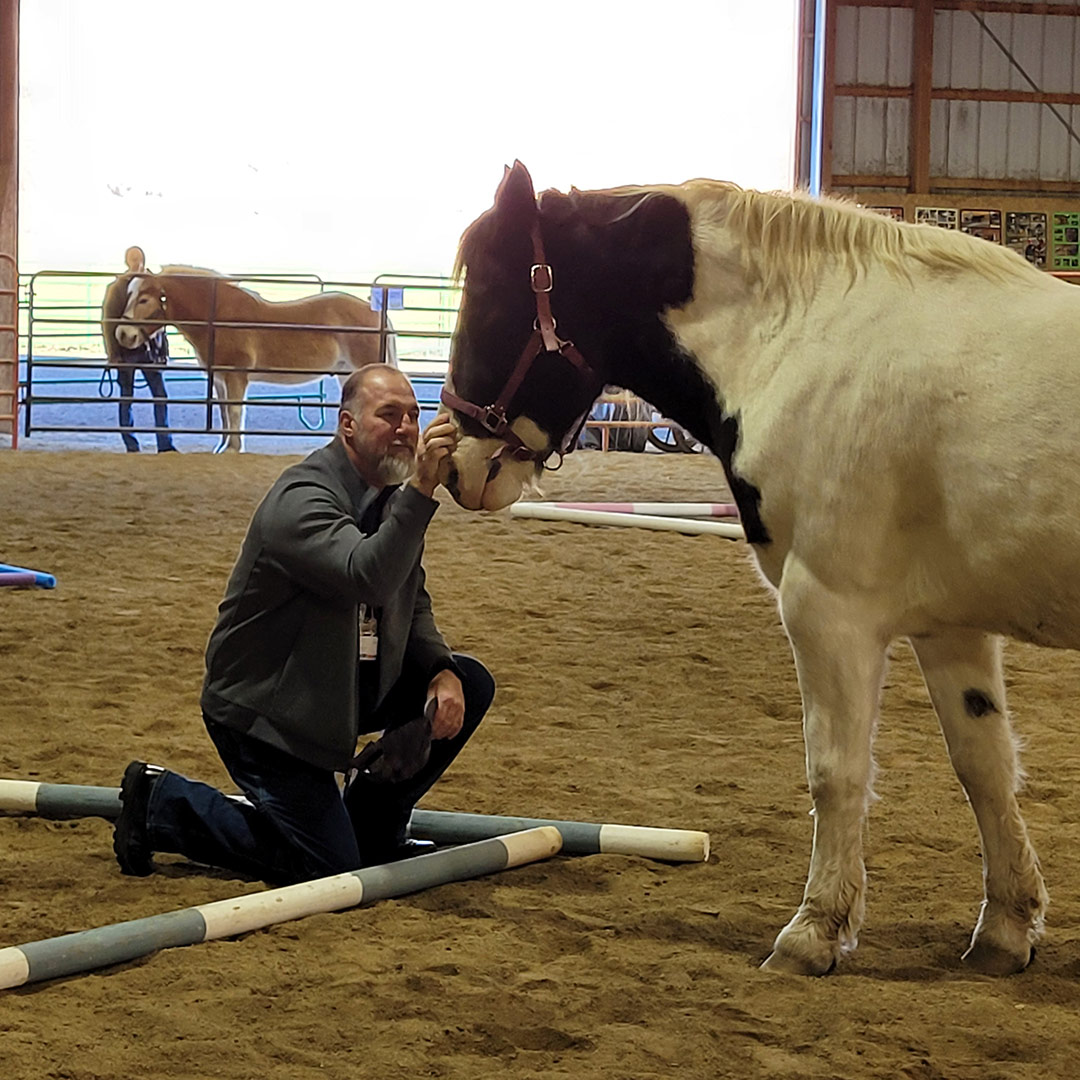
At CHAPS in Wyoming, horse “Bunk” connects with a Veteran from their Veterans Group.

A few minis from Therapeutic Riding Association of Ottawa-Carleton in Ontario, Canada
Look to community foundations
Community foundations are often one of the most promising places to look because they support nonprofits in a specific geographic area and frequently care about local capacity and community impact. The Council on Foundations maintains a community foundation locator, and the national standards program also provides a locator for accredited community foundations.
For equine-assisted service organizations serving a local or regional population, community foundations can be a particularly strong fit.
Ask local businesses
Local businesses can be strong, steady partners when it comes to funding a specific technology need—especially when the request is clear and grounded in real impact.
A local bank, healthcare practice, horse business, law firm, or technology company may not be in a position to support a broad annual campaign. But many are willing to step in and underwrite a defined operational investment—something that helps your organization run more smoothly and serve your community more effectively.
When you reach out, keep the message simple and practical: This investment helps your organization improve volunteer coordination, reduce administrative workload, and support stronger, more consistent program delivery for local participants and families.
And here’s something worth naming because it often resonates more than anything else: Local businesses are managing many of the same day-to-day challenges you are.
They’re coordinating people, juggling schedules, keeping track of information, and trying to run efficiently with limited time and resources. The need for better systems, clearer communication, and less administrative friction is something they understand firsthand.
When you frame your request this way, it becomes less about funding a nonprofit—and more about solving a shared operational challenge.
That sense of common ground makes the ask easier to understand, easier to relate to, and ultimately, easier to champion.
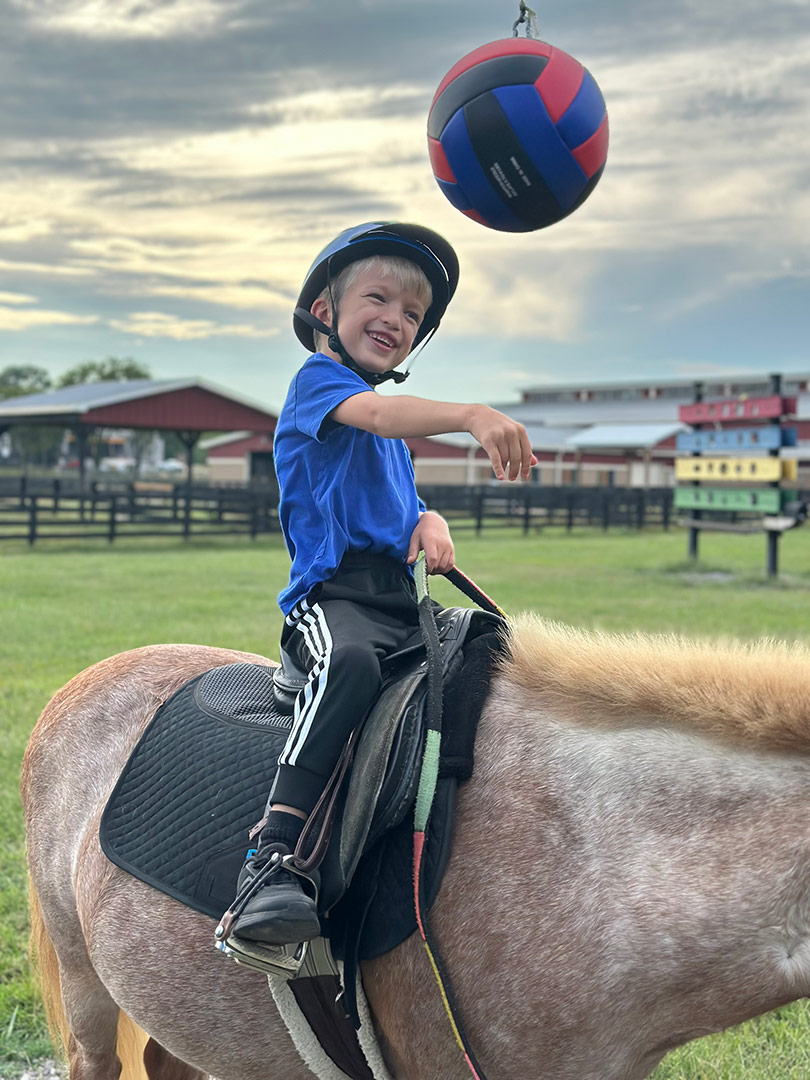
A participant on a sensory trail at Saddle Up in Nashville, Tennessee.

Horses at Bow Valley Equine Adaptive in Alberta, Canada.
Research private foundations
Private foundations can be an excellent fit when your request is framed around organizational strength, service quality, operational resilience, or mission effectiveness.
Some large foundations publish open opportunities or public guidance about their grantmaking. The Gates Foundation posts grant opportunities and notes that many grants go to U.S. 501c3 organizations or other tax-exempt entities. The Ford Foundation publishes active grants and limited funding opportunities, though it generally does not accept unsolicited proposals outside those channels. Mozilla Foundation also runs grantmaking tied to technology and public-interest issues.
The lesson is not that every private foundation will fund software. It is that many will consider technology when it is clearly connected to mission delivery and organizational capacity.
Search government grant opportunities
Federal and state grant programs can sometimes support technology-related investments, especially when the nonprofit’s work connects to education, health, disability services, research, or community development. Federal opportunities are generally listed through Grants.gov, and eligibility varies by program. NIH, the U.S. Department of Education, and NSF all run grant programs that may be open to nonprofits depending on the opportunity.
Government funding is rarely the easiest starting point for a Wranglr request, but it can be worth exploring if your organization already pursues public grants or works in areas that align with agency priorities.
Explore nonprofit technology networks
Not every technology support resource is a traditional grantmaker, but some can still help nonprofits access discounts, donated products, learning resources, or small grant opportunities.
TechSoup helps nonprofits access donated or discounted technology products and services from major providers. NTEN offers nonprofit technology learning resources and currently includes programs such as Tech Accelerate and limited cybersecurity microgrant support.
These resources may not directly fund Wranglr, but they can strengthen your overall technology plan or free up budget for other needs.
Consider crowdfunding for a focused ask
Crowdfunding through platforms like GoFundMe, JustGiving, Indiegogo, Happy Pot and Chuffed can be a powerful option when the need is clear, the amount is specific, and the story is easy to share.
For Wranglr, that might sound like: “Help us fund the software that keeps our volunteers, participants, and programs organized.”
What makes crowdfunding especially meaningful is how it opens the door for more people to be part of the mission.
Instead of relying on one or two large donors, you’re inviting a whole community to contribute—each at a level that feels right for them.
That could include:
- Local supporters who care about your impact
- Families connected to your program
- Volunteers who want to give back
- Community members who may not have a large budget, but still want to help
Many of these folks already understand the value of your work. They’ve seen it firsthand. Crowdfunding gives them a way to be part of it in a tangible, accessible way.
And when people can give in a way that fits their means, they’re more likely to feel connected—not just as supporters, but as part of the team behind your mission.
Campaigns like this tend to work best when paired with:
- Social sharing
- Direct outreach to your network
- Support from your board and core advocates
Keep it simple. Keep it specific. And invite your community in. Because when everyone has a way to contribute, even in small amounts, it adds up to something that makes a real difference.
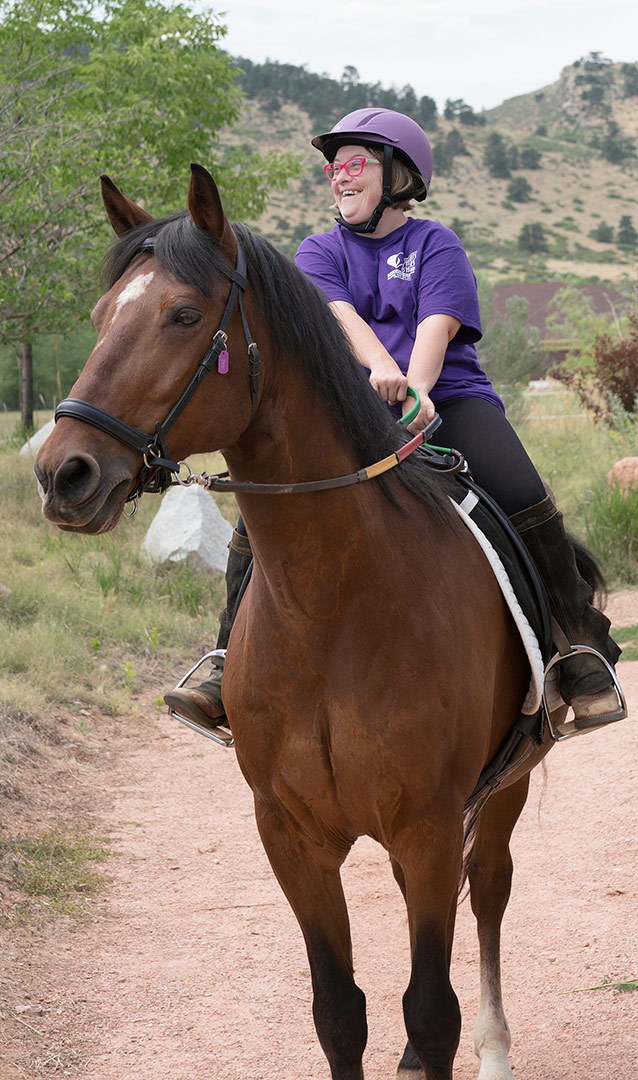
A smiling participant with Down Syndrome at Hearts & Horses in Loveland, Colorado

Nonprofit IT Grant Sources
Here is a simple overview of where nonprofit technology funding often comes from.
| SOURCE TYPE | DETAILS | SPECIFIC SOURCES |
| Government Agencies | Government agencies may support technology-related infrastructure, education, health, disability, research, or community service work. Eligibility depends on the specific opportunity. | Grants.gov; NIH; U.S. Department of Education; NSF |
| Private Foundations | Private foundations may fund organizational effectiveness, infrastructure, innovation, or mission-aligned projects. | Gates Foundation; Ford Foundation; Mozilla Foundation; The Enterline Foundation; Innovating Worth Projects Foundation; The Mentor Network; People with Disabilities Foundation |
| Corporate Donors | Corporate giving programs may offer grants, credits, donations, or local sponsorships for technology and capacity needs. Microsoft and Google both maintain nonprofit support programs. | Microsoft; Google; local business giving programs |
| Community Foundations | Community foundations support nonprofits in a specific region, often making them a practical fit for local service organizations. | Community foundation locators through national sector groups |
| Nonprofit Technology Networks | These organizations help nonprofits access discounted tools, learning resources, and some limited grant support. | TechSoup; NTEN |
| Crowdfunding | Works best for concrete, easy-to-explain technology needs with a clear funding target. | GoFundMe, JustGiving, Indiegogo, Happy Pot, Chuffed |
Best practices for applying for a nonprofit IT grant
Once you identify a possible funding source, the next step is building a strong case.
1. Explain how the technology supports your mission
Do not assume the funder will automatically understand why software matters.
Spell it out. Wranglr helps equine-assisted service organizations coordinate volunteers, manage participant information, streamline scheduling, and centralize daily operations. The software itself isn’t the mission—but it helps the mission happen more effectively, and therefore with greater community impact.
2. Demonstrate clear need
A strong application explains the current problem in concrete terms.
That might include:
- too much time spent managing spreadsheets
- volunteer coordination spread across email, calendars, and paper files
- participant information living in multiple places
- duplicate data entry
- difficulty maintaining continuity when staffing changes occur
Specific need creates a stronger case than general frustration.
3. Show how the investment will improve your work
Be as practical as possible.
Instead of saying Wranglr will “improve efficiency,” explain how. For example:
- it will reduce hours spent on volunteer coordination each week
- it will centralize scheduling and participant tracking
- it will reduce dependence on disconnected systems
- it will preserve institutional knowledge when staff roles change
- it may reduce pressure to hire additional coordination support
4. Align the request with the funder’s priorities
This is one of the most important parts of any application.
A funder may care most about:
- disability services
- youth development
- mental health
- education
- veterans
- community betterment
- volunteer engagement
- retaining volunteers
- nonprofit resilience
- local impact
Your job is to connect Wranglr to those priorities by showing how stronger systems support better service delivery.
5. Keep the budget simple and clear
For many Wranglr requests, the budget can be straightforward: Wranglr annual subscription
Then add a short justification that explains the subscription supports specialized management software designed specifically for equine-assisted service organizations.
Simple is often stronger than overcomplicated.
6. Include measurable outcomes
You don’t need a complicated evaluation plan to make a technology request credible.
In fact, the most compelling outcomes are often the most practical ones—the kind your team already feels day to day.
For Wranglr, that can look like:
- Hours saved each week on scheduling and coordination
- Improved volunteer coordination and fewer last-minute gaps
- Fewer manual processes and less time spent on paperwork
- Stronger continuity during staffing transitions
- Reduced administrative burden across your team
- Better visibility into participant and volunteer information
These are real, believable improvements that are easy to explain—and just as easy to report back on.
It’s also worth noting: Wranglr itself makes tracking and reporting on these metrics much easier.
With built-in reporting, time tracking, and centralized data, your team can clearly see what’s improving and share those outcomes with funders, board members, and your community. That means you’re not just making the case for the investment—you’re able to show the impact over time.
Keep it simple. Focus on what actually changes for your team.
Because when you can clearly show how things are running better, it builds confidence—and makes it easier for others to support the work you’re doing.
7. Highlight partnerships when relevant
If a donor has offered a match, a board member is helping champion the request, or a local business is willing to support part of the cost, say so.
Partnerships and endorsements help demonstrate momentum and credibility.
8. Review the application instructions carefully
This part is easy to underestimate. Federal opportunities can involve formal registrations and process requirements through Grants.gov and related systems. Technology support programs from major providers and nonprofit intermediaries also have their own verification and eligibility rules.
Following directions closely is part of making a competitive request.

Therapy horse at Therapeutic Riding Association of Ottawa-Carleton in Ontario, Canada
A simple Wranglr grant positioning statement
Here is language a nonprofit can adapt directly:
We are seeking funding for an annual subscription to Wranglr, specialized management software created for equine-assisted service organizations. This investment will strengthen volunteer coordination, reduce administrative burden, centralize participant and program information, and support more consistent service delivery for participants and families.
That is a much stronger ask than simply saying, “We need software.”
The best place to start
For most equine-assisted service organizations, the best first move is not a large national grant application.
It is usually a focused list:
- current donors
- local businesses
- community foundations
- private foundations already aligned with the mission
- nonprofit technology support resources
- government opportunities that match the organization’s service area and eligibility
That approach tends to produce better opportunities and a better fit.

downloadable technology grant templates
Helpful Templates
If you’re ready to begin, use our templates:
The bottom line
The strongest technology grant requests for Wranglr are not really about technology alone.
They are about building the operational capacity that helps equine-assisted service organizations coordinate volunteers well, reduce paperwork, preserve institutional knowledge, and focus more fully on participants and families.
When you frame Wranglr as mission-supporting infrastructure, your grant request becomes much stronger.
And that is often the difference between asking for software and securing support for the systems that make your work possible.

Close-up of horse Loki at Bow Valley Equine Adaptive in Alberta, Canada.
Start Wranglr Free
Take Wranglr for a full 6-week trial, no pressure, no rush. We’ll set everything up, walk you through it, and give your team the space to explore at your own pace. See how much smoother your center can run when the chaos settles and everything finally works together.

Sign up for updates
About our product
Product demo
All features
Start free trial
Customer stories
Reviews
Company
For Clients
Login to Wranglr
Help & Support
Contact
Knowledge base
FAQs
Get a tech grant